



Industry sees large future market – farmers call for equal standards
Ortenau – After around a quarter of a century of negotiations, the
trade agreement between the South American Mercosur states and the European Union is set to be signed.
Potential
The Black Forest Power Region also wants to benefit from the new free trade agreement
and has already put out feelers in this direction in the recent past. “We have
already had important and very good experiences in South America. In 2023,
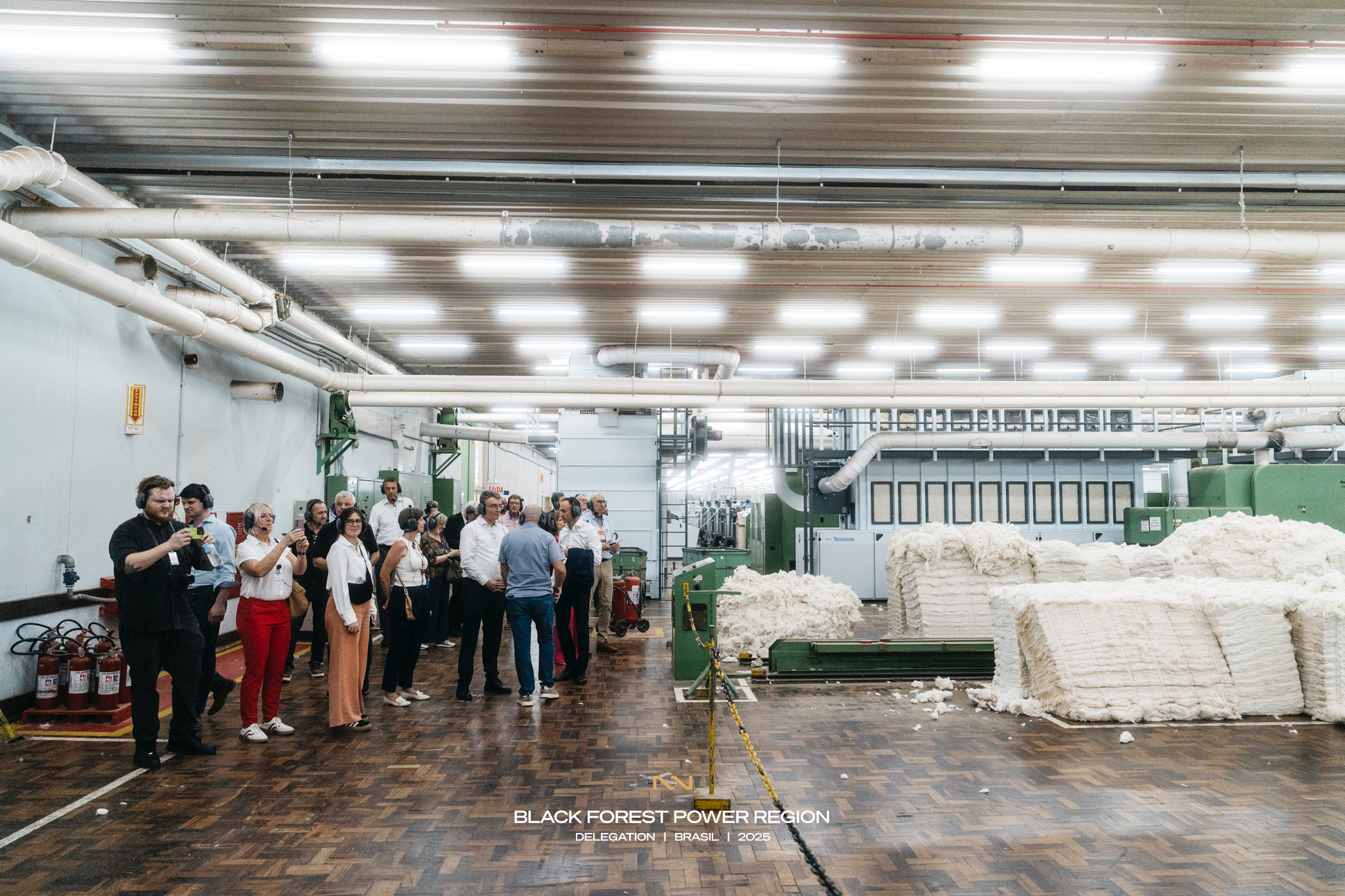
we set off for Brazil with the first nectanet business delegation.
Four of the 30 or so participating companies are now active in Brazil,” says Dominik
Fehringer, Managing Director of the nectanet business association, when asked by Guller. For him
, the agreement and the associated reduction in customs duties and
simplified market access as well as the more reliable framework conditions for investments open up considerable strategic opportunities for domestic companies.
In his view, the mechanical and plant engineering, electrical and energy technology, automotive suppliers, environmental and energy solutions and medical technology sectors in particular could benefit from the agreement. “These sectors are strongly represented in our region and have precisely the technologies that are in high demand in the Mercosur states – especially in Brazil,” says Fehringer. South America is a future market with enormous potential. “This is precisely why it is right that we, as a business development agency, support companies in getting to know this market,” he continues.
What local companies often still lack is market knowledge of the legal
framework, cultural differences and local networks. According to Fehringer, political uncertainties, bureaucracy and different standards could pose challenges for companies.
Agriculture critical
The different standards are also the main criticism of the free trade agreement from the regional agricultural sector. “The Mercosur agreement is important from an economic and geopolitical perspective – we expressly recognize that. At the same time, we see risks for
domestic agriculture because the agreement provides for market openings in areas where there are considerable differences in social, environmental and animal welfare standards,” emphasizes Bernhard Bolkert, President
of the Baden Agricultural Association (BLHV), when asked by Guller. If products are imported that are produced under significantly different rules, this would jeopardize the competitiveness of regional farms.
The high standards and requirements, for example in the areas of fertilizer law, water and species protection and animal welfare, are demanded by politicians and society.
“At the same time, local farmers have to hold their own in a market that does not reward these services,” says Bolkert.
The agricultural structure in Baden-Württemberg is also a particular challenge for local farms. “The farms have small structures and hardly any opportunities to offset costs through economies of scale. It is therefore not about large import volumes, but about the cost ratios resulting from different standards. This constellation increases the price pressure on domestic products and poses considerable economic challenges for smaller and family-run businesses in particular,” he continues.
Among other things, the President of the BLHV is calling on politicians to provide noticeable relief for
farms and no additional requirements for European agriculture as long as
imports are allowed to enter the market under significantly lower standards. At the same time, local high standards should be better protected so that consumers can continue to have confidence in regional food. “Our goal is not compartmentalization, but fairness. Trade can only work if rules apply to everyone,” concluded Bolkert.

An article from the Guller by Matthias Kerber